Before You Buy the Plant, Read the Window
A bare corner can make a room feel like it is waiting for its last good idea. It is tempting to fill that corner with the plant that caught your eye at the nursery, then hope the room will rise to the occasion. I have found that a plant has a much easier time fitting into a home when the window gets to have its say first.
Light is the deciding factor for an indoor plant, and our eyes are not very good at judging it. A desk beside a window can be far brighter than another desk across the room, even when both places look bright to us. Before choosing a plant, watch the spot through the day and give its actual light more weight than the look of the leaves you had in mind.
That small change in order makes a room feel more settled. You are choosing a plant that can live happily where it is placed, instead of giving a lovely plant a job it cannot do.
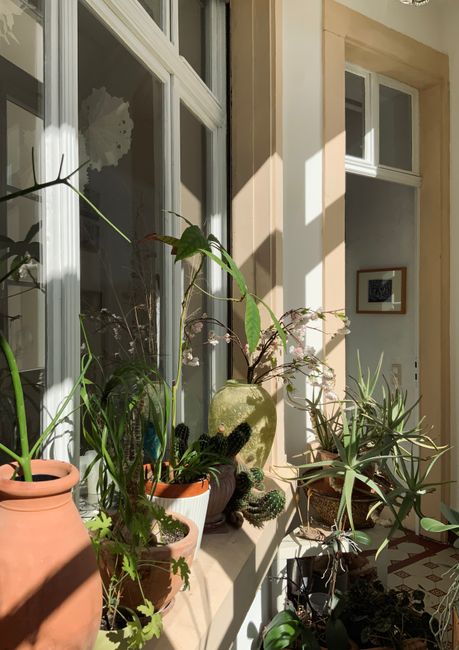
Start With What the Sun Actually Does
Direct light. This is the easy one to spot. The sun reaches the leaves and the plant casts a sharp shadow. An unshaded south or southwest window can give four or more hours of direct sun, while a west window brings strong afternoon light. Cacti, succulents and some herbs suit this sort of position. Many foliage plants do not. They can bleach, scorch or look tired when the summer sun lands on them through clear glass.
Bright indirect light. Here the room is bright and the plant may cast a soft shadow, but the sunbeam does not touch the leaves. A plant set back from a south or west window, or beside an east window after the morning sun has passed, often gets this light. Pothos, philodendrons, monsteras, rubber plants, peace lilies and many flowering houseplants can work well here. It is a useful place for a plant with a little presence, because it is close enough to the window to look at home without having to sit in the hottest patch.
Low light still needs daylight. A north facing room, a corner shielded by trees or buildings, or a place several feet from an east or west window may be low light. It is usually bright enough to read in during the day but does not make a sharp shadow. A windowless room is something else entirely. No ordinary houseplant will keep growing there without a grow light.
Let the Window Direction Set the Mood
South and west windows. These windows offer the strongest light, with west windows bringing the hottest part of the day. Put sun loving plants close to the glass. For plants that want bright indirect light, move them back or use a sheer curtain when the summer sun is too intense. A sheer curtain can soften the glare without making the whole room feel closed off.
East windows. Morning sun is gentler, followed by bright indirect light. This can be a comfortable all round position for many tropical foliage plants. It may still be too little light for a cactus or another plant that wants strong direct sun for much of the day.
North windows. These offer gentle, steady indirect light and no direct sun. Snake plants, ZZ plants, pothos, cast iron plants and some dracaenas can cope here. They will usually grow more slowly than they would in a brighter place, so their watering needs slow down too. That is a tradeoff worth accepting when the room needs a calm green presence rather than a plant that is always asking for the best seat by the window.
Use the Plant to Tell You When the Spot Is Wrong
Too little light. Long gaps between leaves, stems stretching toward the window, smaller new leaves, fading variegation and lower leaves dropping are all signs that a plant wants more light. Move it closer to the window before adding more water or fertiliser. Neither can replace light.
Too much light. Bleached patches, brown crisp spots, faded colour and leaves curling away from the light point the other way. This often appears quickly on the side facing a sunny window. A few feet of distance or a sheer curtain can be enough to make the spot workable.
Change the care with the light. In a dim room, soil stays wet longer because the plant uses water more slowly. Check below the surface before watering instead of keeping the same weekly routine you used on a sunny sill. Yellow leaves, mushy stems, fungus gnats and sour smelling soil can follow when a plant stays damp too long.
Choose a Plant That Can Keep Its Place
For a dim bedroom or a hallway with some borrowed daylight, a ZZ plant, snake plant or cast iron plant can stay tidy without needing constant attention. Pothos can soften a shelf or cabinet, though its variegated leaves may turn greener in lower light. A peace lily can flower in brighter indirect light, but in a dimmer room it is better chosen for its foliage.
Rooms also change with the seasons. A spot that works in summer may need a plant moved closer to the glass in winter, while a sunny windowsill can become too harsh when days are long. Dust on broad leaves also blocks light, so a gentle wipe matters more in a darker room than it first seems.
The best indoor plant is not always the dramatic one you first pictured. It is the one whose light, water and place in the room agree with each other. Read the window first, then let the plant make itself at home.